-
×
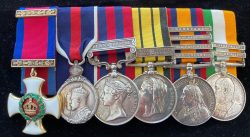
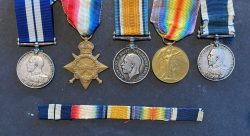
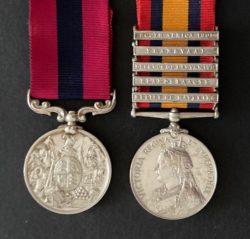 D.C.M. (VR) Q.S.A. Relief of Mafeking, Elandslaagte, Defence of Ladysmith. Sq. Sergeant Major 5th Drag. Gds & Regimental Sergeant Major. Imperial L.H. Exceptional posthumous award for Hartbeestfontein 22/3/1901, where the recipient was killed in action , a rearguard action later described by the Boer leader Smuts as ‘the most brilliant one I had seen fought by either side during the entire campaign. Both General de la Rey and myself were determined to capture the pom-pom, as well as the ILH” . Additionally commended for Cyferfontein where the ILH came under close range, withering fire from a far numerically superior Boer force, and with mounting casualties with his charger shot in several places and his uniform and saddlery shot though in many places galloped up and down the whole line of ILH, hat in hand, waving the men away, shouting the order: “Retire! Retire!”
1 × £5,200.00
D.C.M. (VR) Q.S.A. Relief of Mafeking, Elandslaagte, Defence of Ladysmith. Sq. Sergeant Major 5th Drag. Gds & Regimental Sergeant Major. Imperial L.H. Exceptional posthumous award for Hartbeestfontein 22/3/1901, where the recipient was killed in action , a rearguard action later described by the Boer leader Smuts as ‘the most brilliant one I had seen fought by either side during the entire campaign. Both General de la Rey and myself were determined to capture the pom-pom, as well as the ILH” . Additionally commended for Cyferfontein where the ILH came under close range, withering fire from a far numerically superior Boer force, and with mounting casualties with his charger shot in several places and his uniform and saddlery shot though in many places galloped up and down the whole line of ILH, hat in hand, waving the men away, shouting the order: “Retire! Retire!”
1 × £5,200.00
Subtotal: £5,200.00